
School Ceiling Cleaning
Introduction
Students spend over 1,000 hours per year in classrooms. Teachers spend even more. And above all of them are ceiling tiles that may be harboring dust, allergens, staining, and contaminants that affect their health and ability to learn.
School ceiling cleaning is one of the most overlooked maintenance priorities in educational facilities—yet it directly impacts indoor air quality, student health, and the learning environment.
This guide covers what school administrators, facility directors, and district maintenance teams need to know about keeping ceilings clean, safe, and compliant.
Why School Ceilings Matter
Schools face unique ceiling maintenance challenges that other commercial buildings don’t experience:
Vulnerable Populations
Children are more susceptible to air quality issues than adults. Their respiratory systems are still developing, they breathe faster relative to body size, and they spend extended periods in the same indoor environment.
Contaminants that might cause minor irritation in adults can trigger significant health issues in children—especially those with asthma, allergies, or other respiratory conditions.
Extended Exposure
Students spend 6-8 hours per day in school buildings, 180+ days per year. Teachers and staff spend even more time. This extended exposure magnifies the impact of any air quality issues.
A contaminated ceiling tile isn’t a one-time exposure—it’s continuous exposure for months or years.
High Occupancy Density
Classrooms pack 20-35 students into relatively small spaces. This density increases HVAC demands, humidity from breathing, and the spread of any airborne contaminants.
Aging Infrastructure
Many schools operate in buildings that are 30, 40, or 50+ years old. Aging ceiling tiles, outdated HVAC systems, and years of deferred maintenance create cumulative contamination that’s difficult to address.
Health Impacts in Schools
Contaminated ceiling tiles directly affect student and staff health:
Respiratory Issues
Dust, allergens, and biological growth accumulating on ceiling tiles circulate through HVAC systems into classrooms. Common symptoms include:
- Increased asthma attacks and respiratory distress
- Nasal congestion and sinus problems
- Coughing and wheezing
- Throat and eye irritation
- Headaches and fatigue
The EPA estimates that poor indoor air quality affects approximately 1 in 13 school-age children with asthma.
Sick Building Syndrome in Schools
Sick Building Syndrome—a pattern of health symptoms that improve when leaving the building—is increasingly documented in schools. Symptoms include:
- Difficulty concentrating
- Fatigue and drowsiness
- Headaches
- Nausea
- Respiratory irritation
These symptoms directly affect learning outcomes. Students who don’t feel well can’t focus. Teachers dealing with chronic symptoms can’t teach effectively.
Allergy Aggravation
Ceiling tiles collect and redistribute allergens including:
- Dust and dust mites
- Pollen tracked in from outside
- Airborne spores
- Pet dander (from clothing)
For the significant percentage of students with allergies, contaminated ceilings make symptoms worse throughout the school day.
Teacher and Staff Health
Teachers spend more time in school buildings than students. Chronic exposure to contaminated environments contributes to:
- Increased sick days
- Reduced job satisfaction
- Long-term respiratory issues
- Workers’ compensation claims
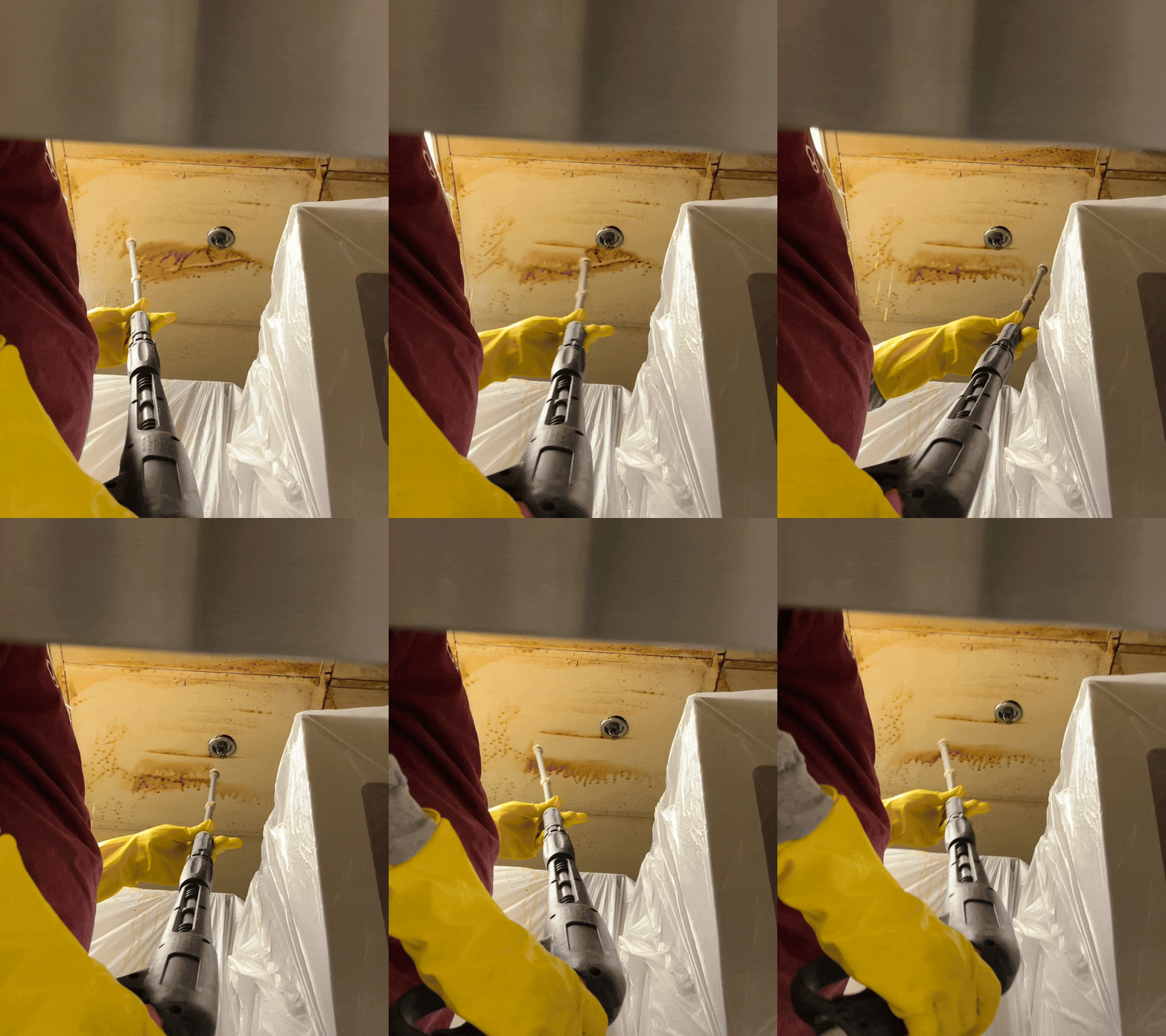
Common Ceiling Problems in Schools
Different areas within schools face different ceiling challenges:
Classrooms
- Dust accumulation — Years of chalk, dry-erase marker particles, and general dust
- HVAC contamination — Older systems distributing particles to ceiling surfaces
- Water damage — Roof leaks and plumbing issues causing visible staining
- Age-related deterioration — Yellowing, sagging, and general wear
Cafeterias
- Grease and food particles — Cooking and food service contamination
- Steam and humidity — Kitchen moisture affecting nearby tiles
- Odor absorption — Years of food smells embedded in porous tiles
- Health code requirements — Same standards as commercial food service
Gymnasiums
- High ceilings — 30-40+ foot ceilings collecting dust
- Humidity — Perspiration and activity increasing moisture
- Ball impacts — Damaged tiles from athletic activities
- HVAC demands — Large volumes of air cycling through contaminated surfaces
Science Labs
- Chemical exposure — Fumes and particles from experiments
- Ventilation requirements — Specialized exhaust affecting ceiling conditions
- Safety compliance — Ceiling conditions affecting lab safety standards
Restrooms and Locker Rooms
- High humidity — Steam from showers and sinks
- Biological growth — Conditions that encourage contamination
- Ventilation issues — Often inadequate exhaust in older buildings
Administrative Areas
- General dust — Paper particles, standard office contamination
- Often neglected — Maintenance focuses on student areas
- Staff health impact — Full-time employees with maximum exposure
The Budget Reality
School districts face constant budget pressure. Ceiling maintenance often gets deferred because it doesn’t seem urgent—until it becomes a crisis.
Deferred Maintenance Costs
Postponing ceiling maintenance doesn’t save money—it shifts costs to the future and increases them:
- Tiles that could be cleaned for $0.50/sq ft eventually need replacement at $3-15/sq ft
- Small, contained problems grow into building-wide projects
- Air quality issues lead to complaints, investigations, and potential litigation
Bond and Budget Cycles
Many districts fund facility maintenance through bonds or dedicated budget cycles. Planning ceiling maintenance as part of these cycles—rather than emergency response—reduces costs and improves outcomes.
Professional Cleaning vs. Replacement
Professional ceiling cleaning costs 50-75% less than tile replacement. For a district with multiple buildings, this difference can mean hundreds of thousands of dollars.
- Cleaning: $0.45 – $0.75 per square foot
- Replacement: $2.00 – $15.00+ per square foot
A district-wide cleaning program can restore ceilings across multiple schools for less than replacing tiles in a single building.
Summer Maintenance Windows
Schools have a unique advantage: predictable maintenance windows when buildings are unoccupied.
Summer Break
The 8-12 week summer break provides the ideal window for ceiling maintenance:
- No students or staff to displace
- No disruption to learning
- Time for thorough work across multiple buildings
- Opportunity to address issues before fall
Winter and Spring Breaks
Shorter breaks can accommodate smaller projects or emergency response:
- Targeted cleaning of problem areas
- Cafeteria ceiling maintenance
- Preparation for health inspections
Planning Ahead
Schedule ceiling assessments in spring to identify summer work. This allows time for budgeting, bidding, and contractor scheduling before the maintenance window opens.

Compliance and Liability
Schools face regulatory oversight that makes ceiling maintenance more than just a maintenance decision:
Indoor Air Quality Standards
The EPA’s Tools for Schools program provides guidance on maintaining healthy indoor air quality. Ceiling conditions are a key component of IAQ management.
Many states have adopted IAQ standards for schools that specifically address contamination sources—including ceiling tiles.
OSHA Requirements
Schools must maintain safe working environments for teachers and staff. Ceiling contamination affecting air quality can trigger OSHA concerns, especially when employees report health symptoms.
Health Department Oversight
School cafeterias face the same health inspection standards as commercial restaurants. Ceiling violations in food service areas can result in citations and required corrective action.
Liability Exposure
Parents expect schools to provide safe environments. When students or staff develop health issues linked to building conditions, schools face potential liability.
Documented ceiling maintenance programs demonstrate due diligence and reduce liability exposure.
ADA Considerations
Students and staff with respiratory disabilities may have accommodation needs affected by air quality. Ceiling contamination can complicate ADA compliance.
District-Wide Programs
For school districts managing multiple buildings, systematic ceiling maintenance makes sense:
Facility Assessment
Assess ceiling conditions across all buildings to prioritize work:
- Identify buildings with the most severe contamination
- Document conditions with photographs
- Categorize needs (cleaning vs. replacement)
- Develop multi-year maintenance plans
Prioritization
Not all spaces are equal. Prioritize based on:
- Occupancy: Classrooms before storage areas
- Vulnerability: Elementary schools before high schools (younger children are more susceptible)
- Contamination level: Visible staining and discoloration before general soiling
- Compliance: Cafeterias facing inspection before general classrooms
Consistent Standards
Establish district-wide standards for ceiling conditions. This ensures equity across schools and simplifies maintenance planning.
Vendor Relationships
A single vendor serving multiple schools provides consistency, volume pricing, and simplified administration compared to building-by-building contracting.
What Professional School Ceiling Cleaning Includes
Professional ceiling cleaning for schools typically involves:
Assessment
- Building-by-building evaluation of ceiling conditions
- Identification of tiles needing cleaning vs. replacement
- Documentation for district records
- Prioritized recommendations
Scheduling
- Work scheduled during breaks or after hours
- Coordination with district maintenance staff
- Building-by-building sequencing for multi-school projects
Cleaning Process
- Protection of classroom furniture, equipment, and materials
- EPA-approved, low-toxicity cleaning solutions safe for school environments
- Tile, grid, and vent cleaning for comprehensive results
Documentation
- Before/after photographs for district records
- Service reports documenting work completed
- Recommendations for ongoing maintenance
- Written documentation of any condition that should be referred to a licensed specialist
- Compliance documentation for health department files
Protect Your Students, Staff, and District
Your students deserve clean, healthy learning environments. Your teachers deserve workplaces that don’t make them sick. And your district deserves maintenance solutions that work within budget constraints.
Professional school ceiling cleaning removes built-up surface contamination, improves indoor air quality, and protects the health of everyone in your buildings—at a fraction of the cost of replacement.
Call (954) 452-0004 or request your free district assessment.
Serving schools throughout South Florida—Miami-Dade, Broward, and Palm Beach counties.