The Hidden Health Risks of Dirty Ceiling Tiles
Introduction
You probably don’t think much about your ceiling tiles. Neither do your employees, your customers, or your tenants.
But here’s what’s happening above everyone’s heads: mold spores multiplying, bacteria colonies growing, dust mites thriving, and allergens circulating through your HVAC system into every corner of your building.
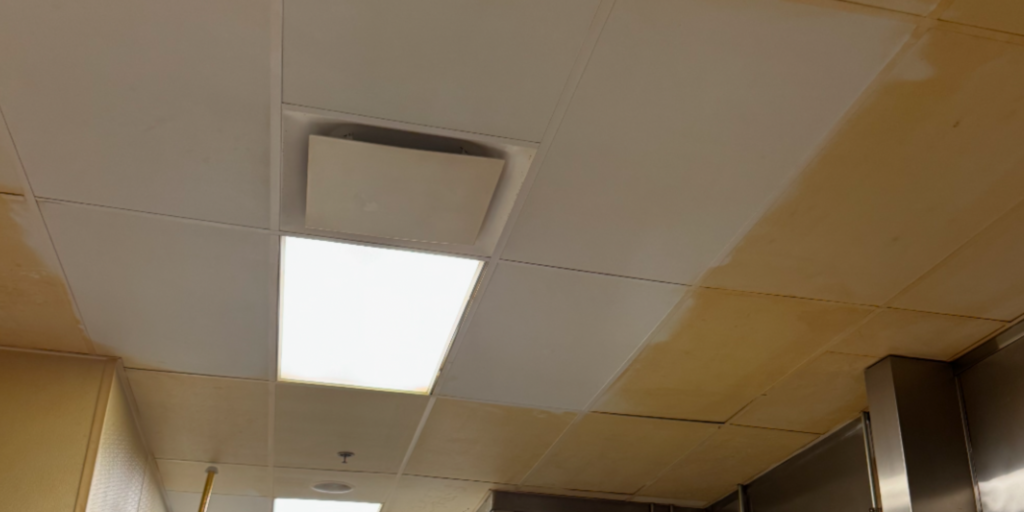
Dirty ceiling tiles are one of the most overlooked contributors to poor indoor air quality—and the health consequences are more serious than most facility managers realize.
From increased employee sick days to respiratory complaints and even litigation, contaminated ceiling tiles create risks that extend far beyond appearance. The good news? Professional ceiling tile cleaning eliminates these hazards before they become costly problems.
Let’s look at what’s really hiding in your ceiling tiles and why it matters.
What’s Actually Growing in Your Ceiling Tiles
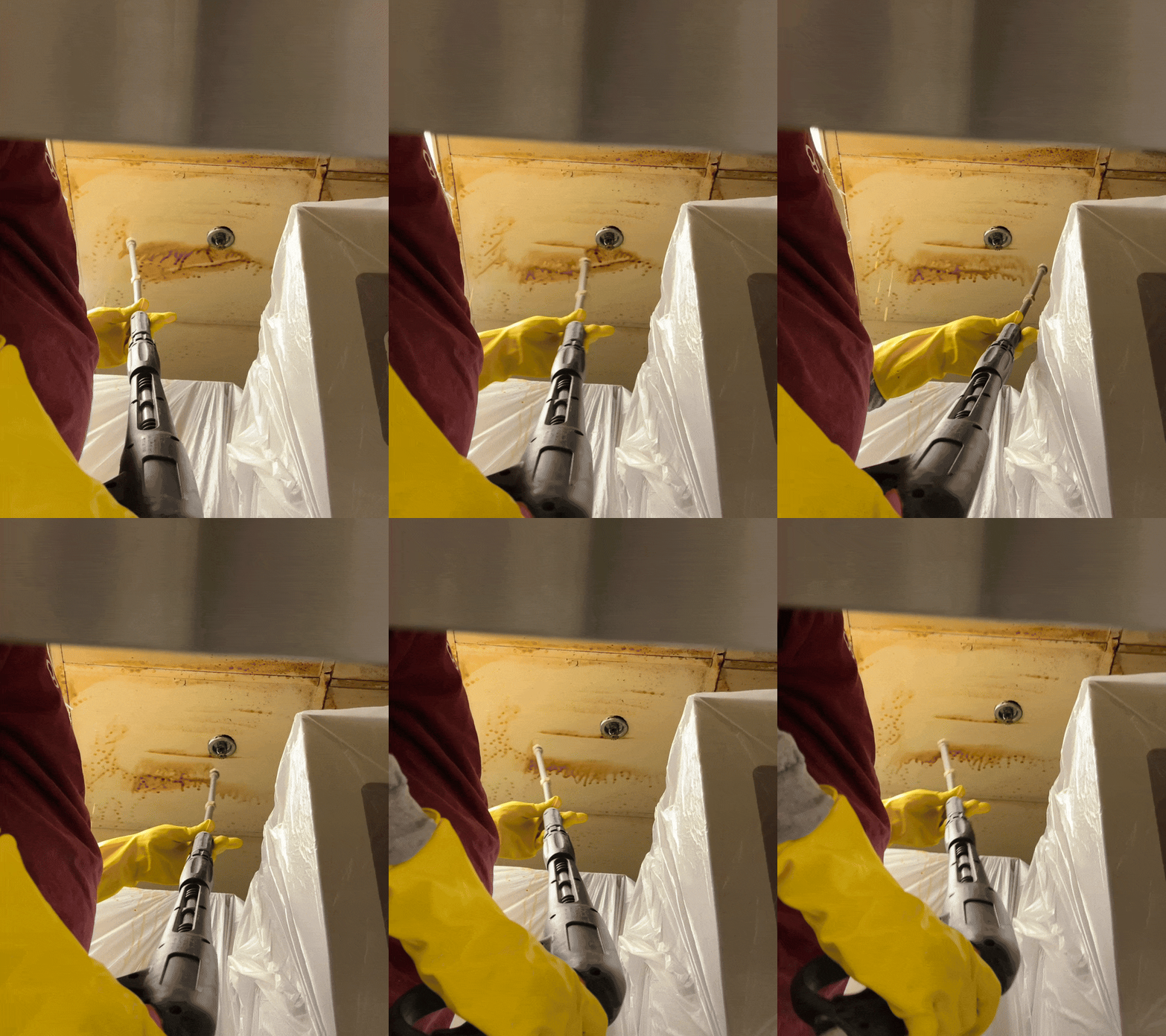
Acoustic ceiling tiles are designed to absorb sound. But their porous, fibrous material also absorbs something else: moisture, dust, grease, and airborne contaminants.
Over time, this creates the perfect environment for biological growth.
Mold and Mildew
Ceiling tiles are prime real estate for mold. The CDC confirms that mold grows readily on ceiling tiles, especially in areas with humidity, roof leaks, or condensation from HVAC systems.
Common ceiling tile molds include Cladosporium, Penicillium, and Aspergillus—all of which release spores that become airborne and circulate throughout your building.
In severe cases, Stachybotrys chartarum (commonly called “black mold”) can develop on water-damaged tiles. This mold produces mycotoxins linked to serious respiratory issues and neurological symptoms.
Bacteria
Studies have shown that acoustic ceiling tiles become breeding grounds for bacteria, fungi, and microbes. As your HVAC system recirculates air, contaminants build up and deposit on porous surfaces—and ceiling tiles are ready-made to accumulate them.
Two bacteria commonly found in contaminated ceiling environments are Rhizopus and Paecilomyces, both classified by OSHA as agents that trigger allergic reactions.
Dust Mites and Allergens
Dust doesn’t just settle on floors and desks. It accumulates on ceiling tiles, especially near HVAC vents and return air ducts. This dust contains allergens, skin cells, pollen, and dust mites—all of which get redistributed into the air your employees and customers breathe.
The Health Consequences Are Real
Contaminated ceiling tiles don’t just look bad. They make people sick.
Respiratory Symptoms
The most common health effects from dirty ceiling tiles are respiratory in nature. According to the EPA, exposure to mold and poor indoor air quality can cause:
-
Nasal congestion and runny nose
-
Coughing and wheezing
-
Shortness of breath
-
Throat irritation
-
Sinus infection
For people with asthma, the effects are worse. The CDC notes that mold exposure can trigger asthma attacks and worsen symptoms in people with existing respiratory conditions.
Sick Building Syndrome
The World Health Organization coined the term “Sick Building Syndrome” (SBS) to describe a pattern of acute health symptoms linked to time spent in a building—symptoms that disappear when the person leaves.
SBS symptoms include:
-
Headaches and fatigue
-
Difficulty concentrating
-
Eye, nose, and throat irritation
-
Dizziness
-
Nausea
Research published in the National Institutes of Health found that SBS may affect up to 30% of workers in some buildings, resulting in significant productivity losses, increased absenteeism, and higher employee turnover.
What causes SBS? Poor ventilation, airborne contaminants, and biological growth—including mold and bacteria accumulating on water-stained ceiling tiles.
Long-Term Health Risks
While most symptoms resolve after leaving the affected environment, prolonged exposure can lead to more serious conditions:
-
Hypersensitivity pneumonitis (an inflammatory lung condition)
-
Chronic sinusitis
-
Bronchitis
-
Worsening of pre-existing allergies and asthma
Individuals with compromised immune systems, the elderly, and young children are particularly vulnerable.
The Business Impact You Can’t Ignore
Health risks translate directly to business costs.
Increased Absenteeism
When employees feel unwell at work—headaches, fatigue, respiratory irritation—they take more sick days. Studies show that poor indoor air quality contributes to 20-30% more employee sick days annually.
One study found that SBS symptoms lead many workers to report a 20% loss in productivity. That’s one day per week of diminished output—from every affected employee.
Legal and Liability Exposure
Employees who develop illness from contaminated indoor environments have filed private lawsuits against employers, resulting in significant financial settlements.
In one well-documented case, the Inland Revenue in the UK closed its 19-story headquarters after half of its 2,000-person workforce suffered SBS symptoms over five years. The cost of lost production, replacement labor, and building remediation far exceeded what prevention would have cost.
Failed Inspections and Compliance Issues
In restaurants, healthcare facilities, and food processing environments, ceiling contamination doesn’t just affect employees—it can result in failed health inspections, regulatory violations, and forced closures.
Health inspectors look up. Visible mold, water stains, or contaminated ceiling tiles are often cited as violations under OSHA, CDC, and state health department standards.
Why Ceiling Tiles Are Uniquely Problematic
Not all building surfaces pose the same risk. Ceiling tiles are particularly problematic for several reasons:
They’re Porous
Unlike glass, metal, or sealed surfaces, acoustic ceiling tiles absorb moisture and contaminants. Once mold or bacteria penetrate the tile material, surface cleaning isn’t enough—the contamination is embedded within.
They’re Connected to Your HVAC System
Ceiling tiles sit directly below (or adjacent to) your HVAC ducts, vents, and returns. Any contamination on ceiling tiles gets distributed throughout your building every time your system cycles.
As one study noted: “Mold growth can quickly impact indoor air quality. As spores become airborne, they’re distributed throughout the space via vents and ducts, potentially contaminating every corner of your facility.”
They’re Out of Sight
Unlike dirty floors or stained walls, ceiling tiles are above eye level. Contamination can build up for months or years before anyone notices—by which point the problem has spread.
They’re Often Neglected
Most cleaning schedules cover floors, restrooms, and common areas. Ceilings? Rarely. This deferred maintenance allows small problems to become major contamination events.
Signs Your Ceiling Tiles Need Attention
How do you know if your ceiling tiles are contributing to indoor air quality problems?
Visual Warning Signs
-
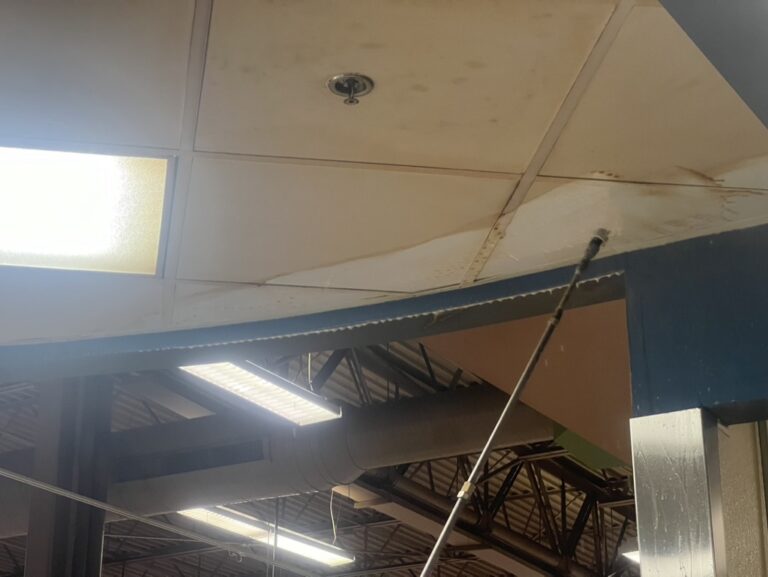
Discoloration or staining: Brown, yellow, or dark spots indicate water damage or biological growth
-
Visible mold: Black, green, or gray patches—sometimes fuzzy or spotted
-
Sagging or warping: Moisture absorption causing structural degradation
-
Dust accumulation: Visible dust buildup near vents and returns
Environmental Clues
-
Musty or stale odors in the building
-
Increased humidity in certain areas
-
Visible condensation on ceiling surfaces or HVAC components
Health Patterns
-
Employees reporting headaches, fatigue, or respiratory symptoms that improve on weekends or vacations
-
Increased sick leave concentrated in specific areas of the building
-
Complaints about “stuffy” or “stale” air
If you’re seeing these signs, it’s time for a professional assessment.

The Solution: Professional Ceiling Tile Cleaning
The EPA is clear: water-stained ceiling tiles should be replaced, and buildings should implement routine maintenance of HVAC systems and ceiling surfaces.
But replacement isn’t always necessary. Professional ceiling tile cleaning can restore contaminated tiles to like-new condition—at a fraction of the cost.
What Professional Cleaning Addresses
A comprehensive ceiling cleaning service eliminates:
-
Surface mold, mildew, and biological growth
-
Embedded dust, allergens, and particulates
-
Grease and smoke residue (especially in kitchen environments)
-
Stains and discoloration
-
Odor-causing bacteria
The Process
Professional ceiling tile cleaning typically involves:
-
Assessment: Evaluating tile condition, contamination level, and moisture sources
-
Preparation: Protecting surrounding areas and equipment
-
Deep cleaning: Using EPA-approved, non-toxic solutions to remove contaminants without damaging tile surfaces
-
Sanitization: Treating tiles to eliminate bacteria and prevent future growth
-
Inspection: Verifying results and identifying any tiles that require replacement
Why Not Just Replace?
Replacement is expensive, disruptive, and often unnecessary. Professional cleaning restores ceiling tiles at 50-75% less cost than replacement, with minimal disruption to your operations.
Plus, cleaning addresses the root cause. Replacing water-damaged tiles without addressing underlying moisture issues just creates the same problem again.
Prevention: Keeping Your Ceilings Clean and Safe
Once your ceiling tiles are professionally cleaned, prevention is key.
Control Moisture
-
Fix roof leaks immediately
-
Address HVAC condensation issues
-
Maintain humidity levels between 30-60%
-
Ensure proper ventilation in high-moisture areas
Schedule Regular Maintenance
-
Include ceiling inspection in your facility maintenance routine
-
Clean ceiling tiles on a regular schedule (annually for most commercial spaces, quarterly for restaurants and healthcare facilities)
-
Address water stains promptly—don’t wait for visible mold
Monitor Air Quality
-
Track employee health complaints by location
-
Consider periodic air quality testing in older buildings
-
Replace HVAC filters regularly
Protect Your People and Your Business
Your ceiling tiles are doing more than absorbing sound. They may be harboring contaminants that affect the health, productivity, and wellbeing of everyone in your building.
The symptoms are often subtle—fatigue, headaches, respiratory irritation—and easily attributed to other causes. But when 20-30% of your workforce is underperforming due to poor indoor air quality, the business impact is anything but subtle.
Professional ceiling tile cleaning eliminates these hidden health risks, improves indoor air quality, and protects your employees, customers, and bottom line.
Don’t wait for a health complaint, a failed inspection, or a lawsuit to look up.
Quick Reference: Warning Signs Checklist
Before your next facility walk-through, check for these ceiling tile red flags:
-
Brown, yellow, or dark stains on tiles
-
Visible mold growth (black, green, or gray spots)
-
Musty or stale odors
-
Sagging, warped, or damaged tiles
-
Dust accumulation near vents
-
Employee complaints about air quality or recurring symptoms
-
Recent water damage or roof leaks
If you check any of these boxes, it’s time to call a professional ceiling cleaning company.
Supporting Evidence
-
CDC: Mold and Health Information (https://www.cdc.gov/mold-health/about/index.html)
-
EPA: Indoor Air Quality and Sick Building Syndrome (https://www.epa.gov/sites/default/files/2014-08/documents/sick_building_factsheet.pdf)
-
OSHA: A Brief Guide to Mold in the Workplace (https://www.osha.gov/publications/shib101003)
-
World Health Organization: Guidelines for Indoor Air Quality
-
National Institutes of Health: Sick Building Syndrome Research (https://pmc.ncbi.nlm.nih.gov/articles/PMC2796751/)
Ready to Breathe Easier?
Your employees spend 8+ hours a day under your ceiling tiles. Your customers form impressions the moment they walk in. And your building’s air quality affects everyone.
Professional ceiling tile cleaning isn’t just maintenance—it’s an investment in health, productivity, and compliance.
Contact Ceilings R Us for a free ceiling assessment. We’ll identify contamination issues, recommend solutions, and help you create a healthier indoor environment—without the cost and disruption of full replacement.
Pingback: dapoxetine 30mg
Pingback: lipitor
Pingback: lasix furosemide 40 mg
Pingback: metoclopramide 10mg
Pingback: ivermectin for scabies
Pingback: doxycycline for chlamydia
Pingback: propecia generic